Acquiring new clients is the lifeblood of any solopreneur business, but the traditional methods are often exhausting. Manually sending hundreds of cold emails or spending hours scrolling through social media for prospects quickly leads to burnout. Furthermore, poorly executed outreach usually feels intrusive and damages your brand reputation.
The goal is to build a system that attracts the right people to you while you focus on delivering high-quality work. When you automate lead generation correctly, you create a predictable pipeline of interested prospects who actually want to hear from you.
This guide explores how to set up intelligent, respectful systems that bring clients in automatically without resorting to aggressive or spammy tactics.
What is Automated Lead Generation?
To build an effective system, we must clearly define what it entails.
To automate lead generation means using software to identify, attract, and capture potential clients’ contact information without manual effort. It involves setting up digital funnels, data extraction tools, and communication sequences that operate 24/7 to continuously build a predictable pipeline of qualified prospects.
When done ethically, this process relies on providing upfront value rather than tricking people into handing over their email addresses. It acts as a digital filter, naturally separating highly interested buyers from casual window shoppers.
The Power of Inbound Marketing Automation
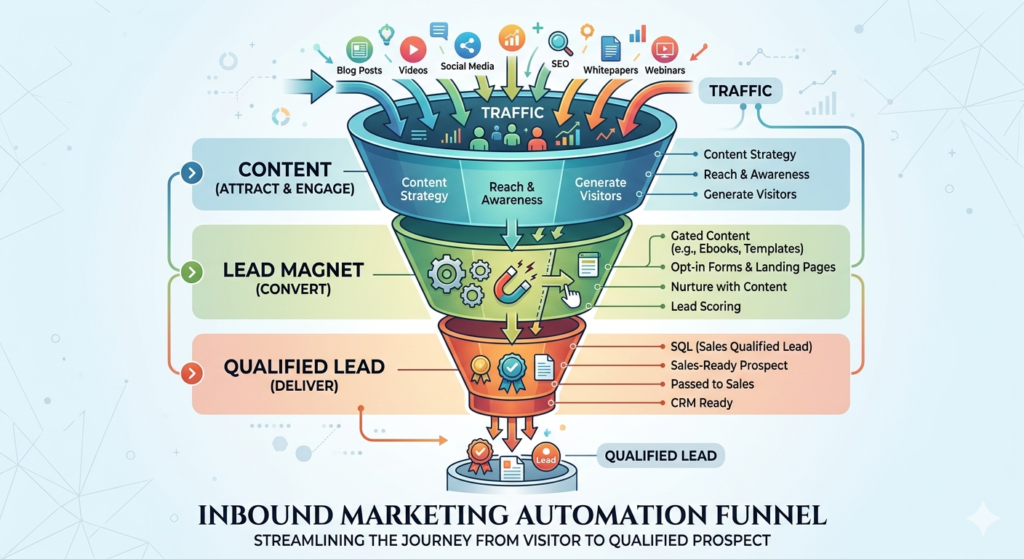
The most effective way to avoid being perceived as spam is to let the client come to you. This is the core philosophy behind inbound marketing automation.
Instead of pushing your message outward to strangers, you create valuable resources that pull people inward. This could be a free downloadable guide, a diagnostic quiz, or an email course that solves a highly specific problem for your target audience. When prospects exchange their contact information for this resource, they are giving you permission to follow up.
To ensure you have a steady stream of traffic hitting these automated entry points, you need a reliable content distribution method. You can learn exactly how to set this up by reading How to Build an Automated Content Engine with AI.
Finding Clients with AI and Smart Tools
Sometimes, inbound methods take time to gain traction, and you may need to reach out directly. The key to outbound automation without spamming is extreme hyper-personalization and precision targeting.
Instead of buying massive, unqualified email lists, you should focus on finding clients with ai and advanced data filtering. You only want to contact people who have a clear, demonstrated need for your services.
Using platforms like Apollo.io/PhantomBuster allows you to filter vast professional databases for highly specific criteria, such as a company’s recent funding rounds, specific job titles, or recent hiring trends. By extracting only these highly relevant profiles, your automated outreach becomes a timely, helpful introduction rather than a random cold pitch.
Building Seamless CRM Workflows
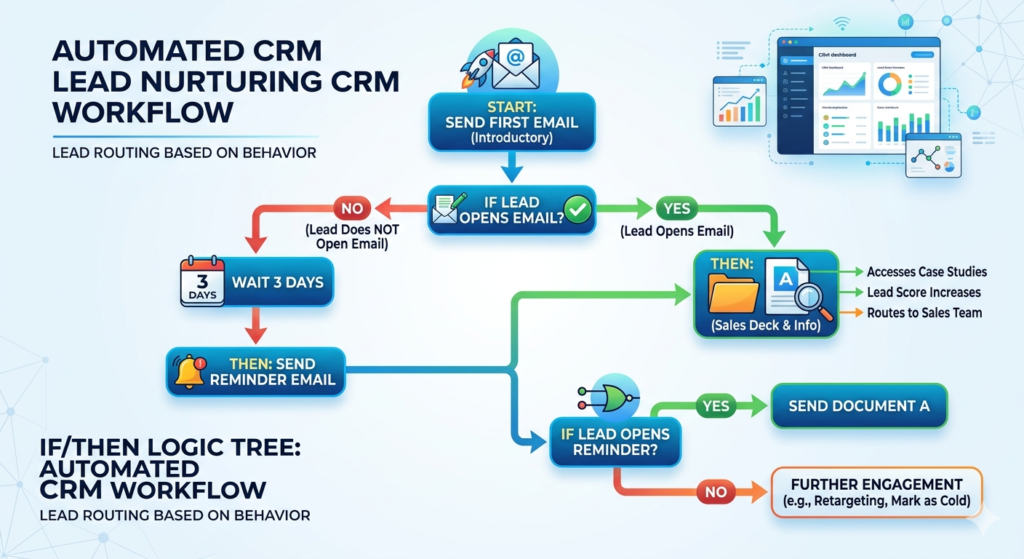
Capturing a lead is only the first half of the equation. What happens immediately after they enter your system determines whether they become a client or unsubscribe.
This is where you rely on robust crm workflows (Customer Relationship Management). A CRM workflow is a sequence of automated actions triggered by a lead’s behavior. If a prospect downloads your pricing guide, the CRM should automatically tag them as a “Warm Lead” and wait two days before sending a follow-up email asking if they have any questions.
These workflows ensure that no one falls through the cracks. They allow you to nurture hundreds of relationships simultaneously while making each person feel like they are receiving your undivided attention.
Conclusion
It is entirely possible to automate lead generation while maintaining your integrity and providing a premium experience. By shifting your focus toward inbound value creation, leveraging smart data filtering, and building responsive communication sequences, you eliminate the need for sleazy sales tactics.
A well-architected system works quietly in the background, ensuring you wake up to a calendar full of qualified prospects who are already interested in what you have to offer.
Frequently Asked Questions (FAQ)
What is a lead magnet?
A lead magnet is a free, highly valuable resource offered to potential clients in exchange for their contact information. Common examples include checklists, templates, video trainings, or industry reports.
Will automated emails hurt my domain reputation?
They can, if you send generic emails to people who have not opted in or who frequently mark your messages as spam. To protect your domain reputation, always use double opt-in for inbound leads, clean your email list regularly, and keep outbound volume low and highly targeted.
How many emails should be in an automated nurture sequence?
A standard nurture sequence typically contains 3 to 5 emails spaced out over a week or two. The goal is to introduce your brand, provide additional value related to the lead magnet they downloaded, and eventually present a low-pressure invitation to work together.
Do I need an expensive CRM to automate my workflows?
No. Many affordable or free-tier email marketing platforms offer basic automation and tagging features that are perfectly adequate for a solopreneur starting out. You can upgrade to a more complex CRM as your data needs grow.