For years, the advice given to solopreneurs has been consistent: “Hustle harder.” The belief was that if you wanted to double your revenue, you had to double your hours. However, in the current landscape of technology, this advice is not just outdated—it is dangerous.
We are witnessing a fundamental shift in the future of work. The bottleneck is no longer your ability to execute tasks; it is your ability to manage the systems that execute them for you.
To survive and thrive as a modern one-person business, you must stop thinking like a freelancer and start thinking like a CTO. You need to adopt an “AI Operations” mindset.
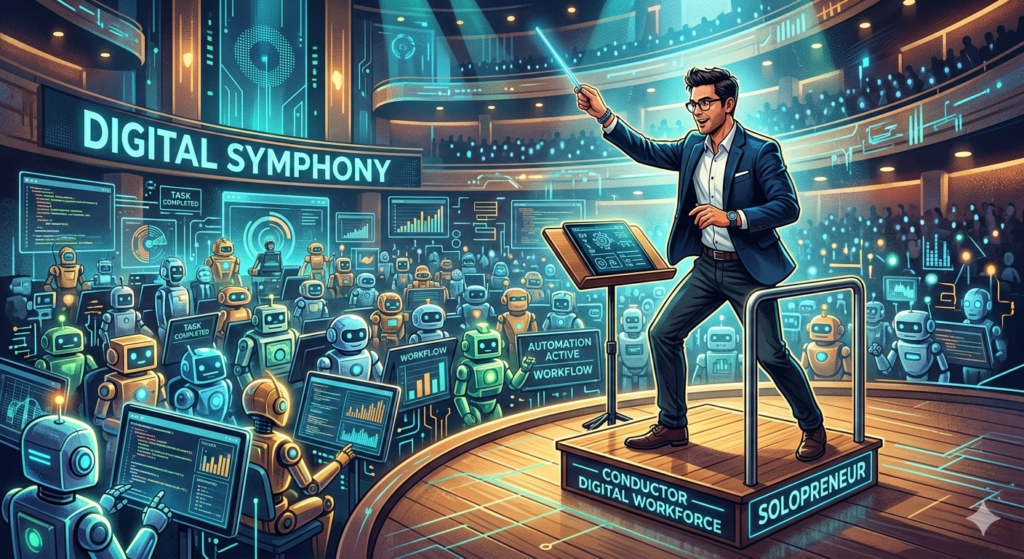
What is AI Operations?
To understand this shift, we need to redefine your role. You are no longer just the “operator”; you are the “architect.”
AI operations definition (for solopreneurs) is the strategic practice of integrating artificial intelligence into business workflows to automate complex cognitive tasks. Unlike traditional automation, which follows rigid rules, AI operations involve managing a “digital workforce” capable of drafting content, analyzing data, and making decisions under human supervision.
In short: Automation moves the hands; AI Operations moves the brain.
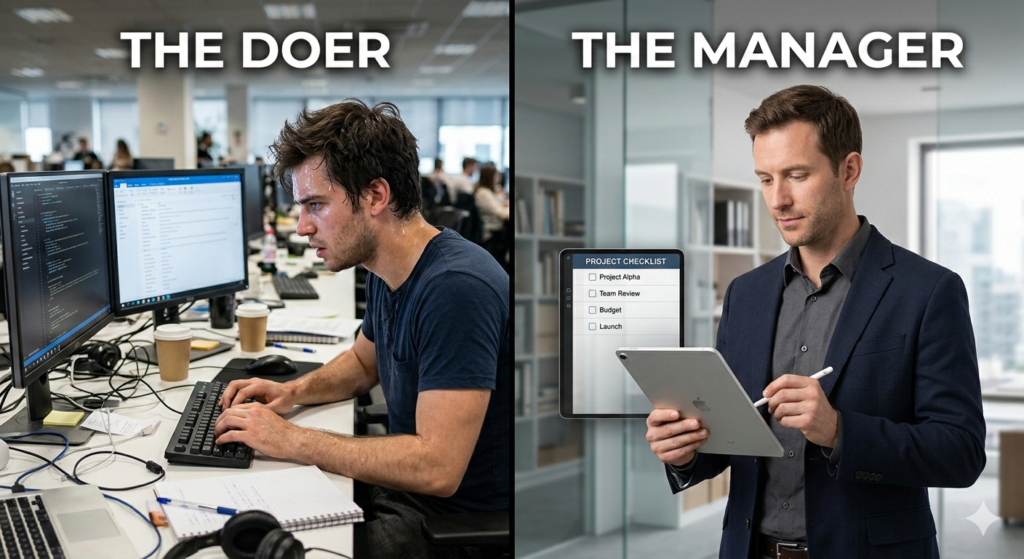
From “Doing” to “Managing”
The hardest transition for a creator or founder is letting go of the “doing.” You are used to being the one writing the code, designing the graphic, or drafting the email.
With an AI Operations mindset, your job changes. You are now the manager.
- Old Way: You spend 2 hours writing a blog post.
- New Way: You spend 10 minutes crafting a detailed prompt, 5 minutes reviewing the AI’s output, and 10 minutes adding your unique voice.
You have just saved 90 minutes, yet the output exists. This leverage allows a one-person business to output the volume of a five-person agency.
Building Your Digital Workforce
Think of every AI tool you use not as software, but as an intern. They are tireless, incredibly fast, but they lack context and judgment.
Your role is to provide the context. When you use advanced models, you are essentially hiring a highly capable assistant. For those serious about this, leveraging the advanced reasoning capabilities of tools likeChatGPT is crucial. The difference between a free model and a paid “reasoning” model is often the difference between a junior intern who needs constant correction and a senior analyst who gets it right the first time.
Treating these tools as a digital workforce means you must:
- Onboard them: Give them context about your brand.
- Train them: Refine your prompts based on results.
- Review them: Never blindly copy-paste their work.
The Competitive Advantage
The barrier to entry for starting a business has never been lower, but the barrier to excellence is rising. Everyone has access to the same tools. The winners will not be the ones who use AI to generate spam; they will be the ones who use AI to elevate their strategy.
By adopting this mindset, you can focus on the high-level architecture of your business—the “Blueprint.” To understand the practical steps of building this architecture, refer to The Solopreneur Automation Blueprint: A Complete Guide.
Conclusion
The era of the “burned-out solopreneur” is ending for those who adapt. By embracing the AI operations definition and shifting your focus from execution to management, you unlock the true potential of the future of work.
You do not need to hire more people to grow. You need to hire better robots and learn how to manage them.
Frequently Asked Questions (FAQ)
What is the difference between Automation and AI Operations?
Automation handles repetitive, rule-based tasks (e.g., “If I get an email, save the attachment”). AI Operations handles cognitive tasks that require some level of “thinking” (e.g., “Read this email, summarize the tone, and draft a polite decline”).
Will AI replace the solopreneur?
No. AI replaces tasks, not owners. The solopreneur who refuses to use AI will likely be replaced by the solopreneur who uses it effectively. The human element—vision, empathy, and strategy—cannot be automated.
Is an AI Operations mindset expensive?
It is relatively cheap compared to hiring humans. While it requires subscriptions to tools, the cost is a fraction of a human salary. The primary investment is the mental energy required to learn how to prompt and manage these tools effectively.
Can I run a business entirely with AI?
Not yet, and likely not for a long time. AI is a tool for leverage, not a replacement for a founder. You still need to provide the direction, the quality control, and the “soul” of the business.